Melon is the one fruit you cannot judge with your eyes.
A peach blushes. A cherry gleams. A strawberry practically announces itself. But a melon just sits there, heavy and green and completely silent about what is going on inside. You can stand in front of a bin of them for five minutes and still have no idea which one is going to be honey sweet and which one is going to taste like a cucumber that gave up.
That is why melon season is worth paying attention to, and why it matters where you buy them. Get it right and you have the best fruit of the Okanagan summer: cold, dripping, sweet enough to make a hot August afternoon feel like a good idea.
If you have been searching for fresh melons in Kelowna, watermelon in Kelowna, local cantaloupe, or Okanagan melons, Don-O-Ray Farms keeps them stocked at 3443 Benvoulin Road in Kelowna’s Lower Mission.
How to Actually Pick a Good Melon
Here is the part nobody teaches you. Melons give up their secrets through weight, sound and smell, not appearance.
Pick it up. A ripe melon feels heavier than it looks. That weight is water and sugar. If it feels light for its size, put it back.
Find the field spot. Every watermelon has a pale patch where it rested on the ground. On a ripe one that patch is a deep buttery yellow or cream. If it is white or barely there, the melon came off too early.
Knock on it. Tap a watermelon with your knuckles and listen for a low, hollow, drum-like sound. A dull thud means the flesh has gone soft and mealy.
Smell the stem end. This is the one that works on cantaloupe and musk melon. A ripe one smells sweet and floral right at the blossom end, strong enough that you can catch it without pressing your nose to it. No smell means no flavour, no matter how good it looks. The stem end should also give slightly under your thumb.
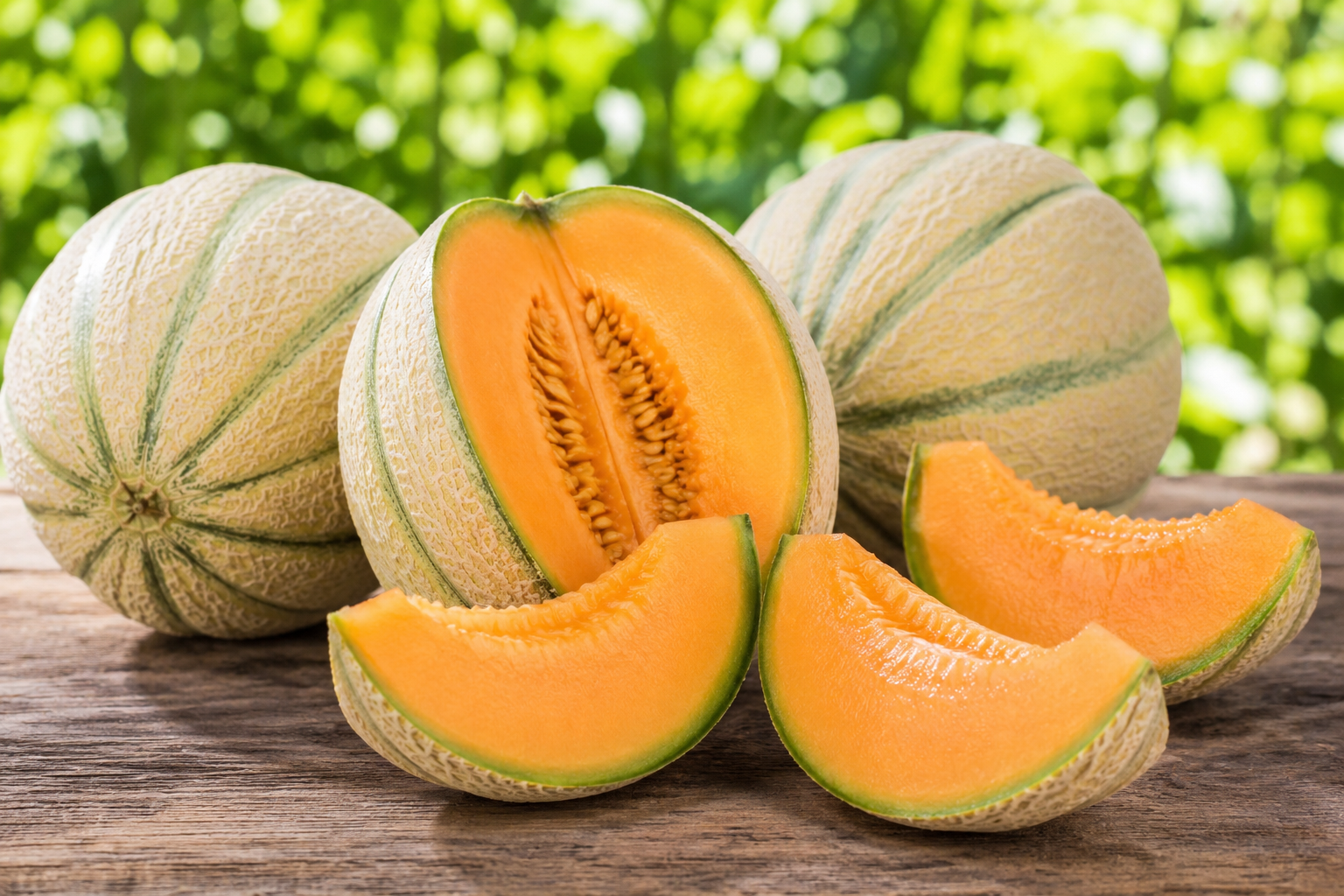
Check the skin. On cantaloupe and musk melon, look for a raised, well-defined netting over a golden background rather than a green one. Green under the netting means it needs more time. Skip anything with soft patches, cracks, or a wet spot.
The Melons Worth Knowing
Watermelon. The obvious one, and still the best one. Look for red and yellow varieties both. Yellow-fleshed watermelon is sweeter and more honeyed than the red, and most people have never tried one, which makes it an easy way to surprise a table full of guests.
Cantaloupe. Orange fleshed, floral and musky, at its best when it is very cold and cut thick. Cantaloupe rewards patience: even a good one is better after a night in the fridge.
Musk melon. Fragrant, soft and honey sweet, with tender orange flesh. If you like cantaloupe, this is the one to graduate to.
Honeydew and seasonal varieties. Pale, mellow and less aromatic, honeydew is the melon for people who find cantaloupe too perfumed. Our seasonal melon selection shifts through late summer, so what is on the shelf in early August is not always what is there in September.
What to Do With a Whole Melon
A melon is a lot of fruit, and there is no shame in eating half of it standing over the sink. But if you want to stretch it:
- Salt it. A pinch of flaky salt on cold watermelon is not a trick, it is the correct way to eat it. Salt makes sugar taste sweeter.
- Watermelon, feta and mint. Cubed melon, crumbled feta, torn mint, olive oil, cracked pepper. Ten minutes, and it disappears faster than anything else on a summer table.
- Cantaloupe with prosciutto. The oldest pairing in the book because it works. Sweet, salty, done.
- Melon and lime agua fresca. Blend melon with cold water, a squeeze of lime and a little honey, then strain. Better than any bottled drink on a 35 degree Kelowna day.
- Freeze the leftovers. Cube it, freeze it on a tray, then bag it. Frozen melon cubes go straight into smoothies, or into a glass of sparkling water as fruit ice that does not water down your drink.
- Pickle the rind. If you grew up with it you already know. If you did not, watermelon rind pickles are sharp, sweet and genuinely worth the afternoon.
How to Store Melons at Home
Leave a whole melon on the counter. Cold slows down the aromatics, and a melon straight from a cool fridge tastes flatter than the same melon at room temperature. Cantaloupe and musk melon will continue to soften and get juicier on the counter, though they will not get any sweeter than the day they came off the vine, so use your nose to decide when.
Once you cut it, everything changes. Wrap it tightly or move it to a sealed container and get it into the fridge, where cut melon holds for about three to four days. Cantaloupe rind carries surface bacteria, so give the outside a quick scrub and dry before your knife goes through it.
And chill your watermelon before serving even though you stored it on the counter. Cold watermelon is a completely different experience from warm watermelon.
Where to Buy Fresh Melons in Kelowna
For anyone searching where to buy watermelon in Kelowna or looking for fresh local melons in the Okanagan, our farm market on Benvoulin Road is an easy stop. We restock fresh produce through the day, so what you carry home is at its best rather than something that has been sitting.
Melons also happen to be the perfect anchor for a summer fruit table, which is why they land so well next to the rest of what is in season right now. Pair them with fresh strawberries, Okanagan cherries, raspberries or peaches and you have a spread that does not need a single thing done to it.
You will find fresh melons alongside our full selection of fruit and vegetables, Nature’s Kitchen products, and a family friendly farm stop that makes the trip worth it on its own.
Melon FAQ
When is melon season in the Okanagan? Melons generally arrive in August and run into September, with the sweetest fruit usually landing in late August. Timing shifts year to year with the weather, so it is worth calling ahead if you are planning around a specific weekend.
How do I know if a watermelon is ripe without cutting it? Three checks: it should feel heavy for its size, the field spot where it sat on the ground should be creamy yellow rather than white, and it should sound hollow and low when you knock on it.
Do melons keep ripening after they are picked? Cantaloupe, musk melon and honeydew will keep softening and getting juicier on your counter, but they will not gain any more sugar. Watermelon does not ripen further at all once it is off the vine, which is exactly why picking a good one at the market matters so much.
Should melons be stored in the fridge? Whole melons do better on the counter. Cut melon needs to be covered and refrigerated, and is best used within three to four days.
What is the difference between cantaloupe and musk melon? They are closely related and the names get used interchangeably. In practice, musk melon tends to be more fragrant and honey sweet with softer flesh, while cantaloupe is firmer with that classic netted rind.
Where can I buy melons in Kelowna? Don-O-Ray Farms stocks fresh melons at 3443 Benvoulin Road in Kelowna’s Lower Mission through the melon season.
Come Grab One
Melon season is short and it is happening right now. Stop by the farm market on Benvoulin Road, pick one up, give it a knock, and take home the best thing about an Okanagan August.